To Stain or Not to Stain
While having a backyard deck that looks like the hardwood floors inside your home sounds ideal, it’s not realistic. Besides, staining your deck can sometimes be more trouble than it’s worth.
Many decks are built from pressure-treated wood, cedar, hardwoods, or various exotic woods. Deciding to stain these decks may not always be the best choice. There are several misconceptions about the benefits of staining. Here are a couple of the most common:
“Staining Will Prolong the Life of My Deck”
This isn’t always true. In most cases, deck boards are not stained on all six sides, which means the wood isn’t fully sealed and won’t get the complete protection you might expect. Elevated decks can be an exception. For maximum protection, the wood should be kiln-dried and pre-stained on all sides and edges before installation, but this process is time-consuming and costly.
“Staining a Deck Means Less Work in the Future”
Another common misconception. Professionals often don’t recommend staining wood decks because of the time and effort required for upkeep. Most stains last only about a year, meaning you’ll need to clean, sand, and restain annually. Hiring professionals each year can be expensive, and doing it yourself can quickly become a frustrating, ongoing chore.
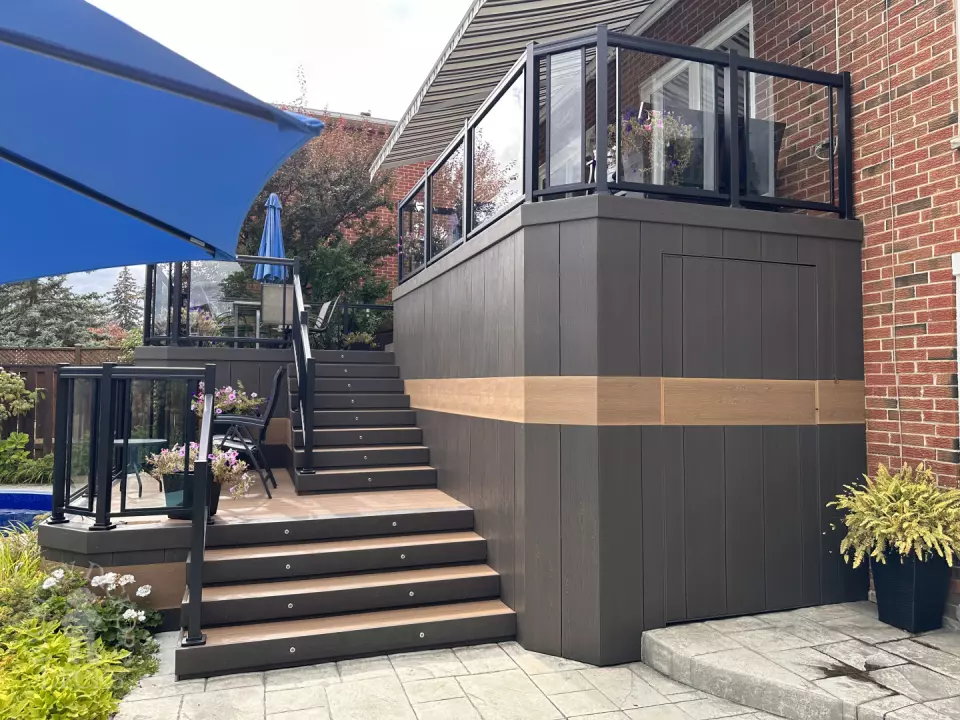
Instead of committing to yearly staining, many professionals recommend allowing your deck to weather naturally and take on a gray patina. If you prefer to maintain a specific color and decide to stain, research products carefully. Better yet, consider a low-maintenance composite deck that offers lasting durability and a variety of color options.
Why You Might Choose to Stain Your Deck
Despite the maintenance, deck staining does offer some clear advantages:
- Aesthetics: Stains enhance the natural beauty of wood, adding rich color and depth. They can refresh an aging deck or customize a new one to match your home’s style.
- UV Protection: Stains help protect wood from the sun’s ultraviolet rays, which cause fading, graying, and drying that can lead to cracking and splintering.
- Moisture Resistance: A quality stain repels water and helps prevent rot, mildew, and warping caused by rain and humidity.
- Easier Cleaning: Stained surfaces are smoother and less porous, making them easier to clean than bare wood.
Choosing the Right Deck Stain
There are several types of deck stains available, each with different benefits:
- Transparent & Semi-Transparent Stains: Allow the natural grain to show through while providing color and UV protection. Ideal for new or well-maintained decks.
- Semi-Solid & Solid Stains: Provide more coverage, hiding some or most of the wood grain. They offer strong UV protection and work well for older decks or for changing the deck’s color.
- Oil-Based Stains: Penetrate deeply and offer durable water repellency.
- Water-Based Stains: Easier to clean up, dry faster, and are more environmentally friendly.
Your decision should depend on the type of wood, your deck’s condition, the desired appearance, and how much maintenance you’re willing to take on.
Enjoy Your Deck, Smartly
Staining can enhance your deck’s appearance and protect it for years, if done properly. However, if regular maintenance feels overwhelming, a low-maintenance composite deck can give you a beautiful, long-lasting outdoor space without the yearly upkeep.
Ultimately, your goal should be to spend more time enjoying your deck and less time maintaining it. Understanding your options and the level of commitment involved helps you make the best choice for your lifestyle and your deck’s longevity.